Salt vs Steel: Scaffolding Inspection Checklist UAE
Salt and steel are in a slow fight, and the salt usually wins. This scaffolding inspection checklist UAE crews can use on coastal sites helps you spot the damage before it turns into a failure.
In the UAE and KSA, the biggest threat to scaffolding and steel pipes isn’t load. It’s the environment. This scaffolding inspection checklist UAE teams can use on coastal and high-humidity sites helps you catch corrosion before it becomes a failure.
Salt-laden air, high humidity, and heavy temperature swings create one of the toughest corrosion settings for steel. Yet many projects still treat scaffolding as temporary, low-risk equipment. That assumption is costly:
- Premature component failure
- Higher safety risk
- Rework and project delays
- Compliance problems
We call this the lifecycle gap. Closing it takes more than supply. It takes inspection, maintenance and training discipline.
Why Marine and Coastal Conditions Change Everything
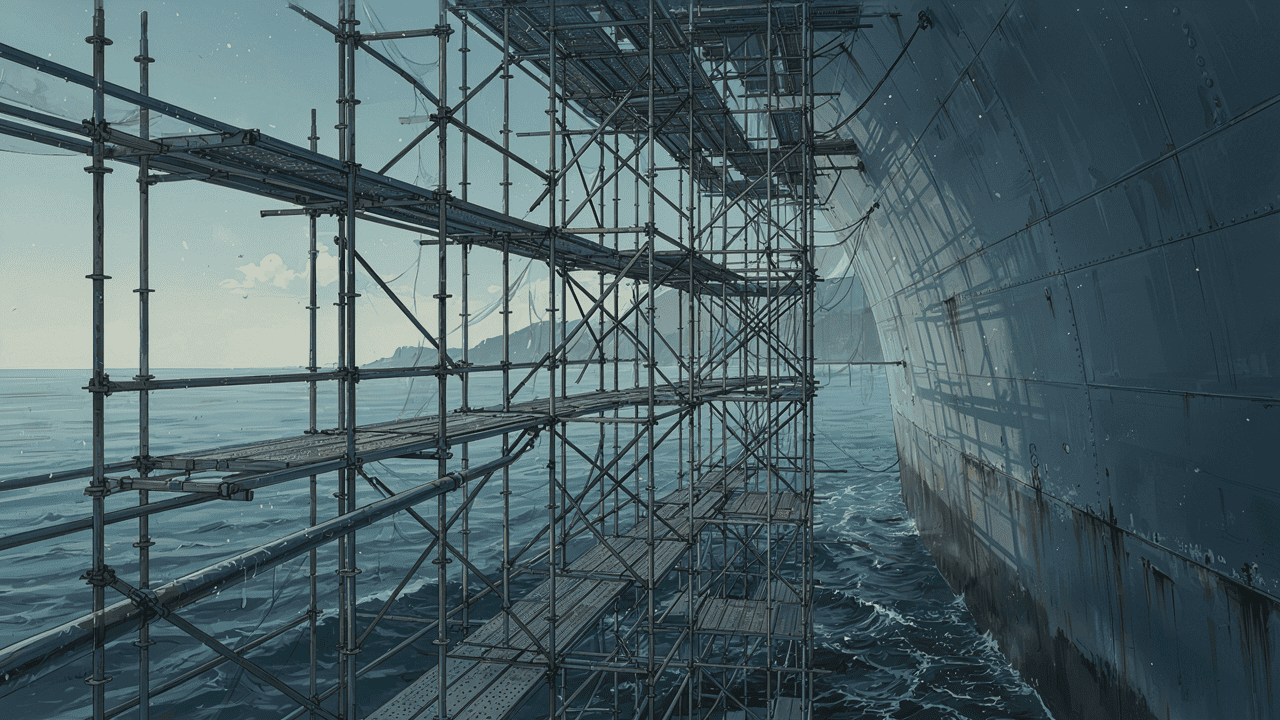
In high-salinity environments:
- Chlorides work through protective coatings.
- Galvanized layers wear away faster.
- Micro-corrosion starts at joints and welds.
- Structural strength drops quietly over time.
ERW pipes and Cuplock systems face extra risk because weld zones are more susceptible, connection points trap moisture, and repeated use speeds up wear. That is why marine-grade scaffolding in KSA and the UAE needs lifecycle management, not just standard practice.
The Hidden Cost of Neglect: Four Stages of Corrosion
Most failures evolve slowly rather than happening suddenly.
- Surface corrosion: minor rust patches and coating discoloration.
- Localized weakness: pitting and reduced wall thickness.
- Structural risk: lower load capacity and unstable joints.
- Failure: collapse under load, or pipe leakage and rupture.
The cost goes beyond replacement. It includes project downtime, contractor liability and safety incidents.
Scaffolding Inspection Checklist UAE: Daily, Weekly and Monthly Checks
Use this checklist on coastal, port, offshore-support and other high-humidity sites.
1. Visual inspection (daily and before use)
- Look for rust, scaling or coating damage.
- Check joints, such as Cuplock nodes and couplers, for corrosion build-up.
- Confirm standards and ledgers are straight.
- Keep platforms clear of debris and moisture.
OSHA’s scaffold rule, 29 CFR 1926.451(f)(3), requires a competent person to inspect the scaffold and its components for visible defects before each work shift and after any occurrence that could affect structural integrity. Read the OSHA scaffolding requirements. Your project’s governing standard may differ, so check your client’s HSE requirements as well.
2. Structural integrity check (weekly)
- Inspect weld seams on ERW pipes.
- Check for dents, deformation, and cracks.
- Verify bracing alignment and tightness.
- Confirm base plates are stable and corrosion-free.
3. Corrosion assessment (monthly)
- Identify pitting on steel surfaces.
- Measure coating thickness (galvanizing or paint).
- Check joints for chloride damage.
- Inspect internal pipe surfaces where possible.
4. Load capacity verification
- Never exceed design loads.
- Remove compromised components from use.
- Replace weakened members immediately.
5. Documentation and tagging
- Keep inspection logs.
- Tag scaffolds as safe or unsafe.
- Record every replacement and maintenance action.
Clear records protect your crew and your contract. Many GCC client HSE systems require them.
Steel Pipe Corrosion Protection for ERW Pipes
ERW pipes are widely used in fire protection, structural work and industrial piping. The key risk areas are the weld seam (heat-affected zone), internal surfaces exposed to moisture, and external coating breakdown.
Best practices for steel pipe corrosion protection:
- Specify hot-dip galvanizing for coastal environments.
- Add epoxy or other protective coatings where exposure is severe.
- Design for drainage so water cannot collect.
- Run periodic thickness testing.
Explore our ERW pipes range and ask our team which finish suits your site.
Cuplock Maintenance Guide: Extend Service Life
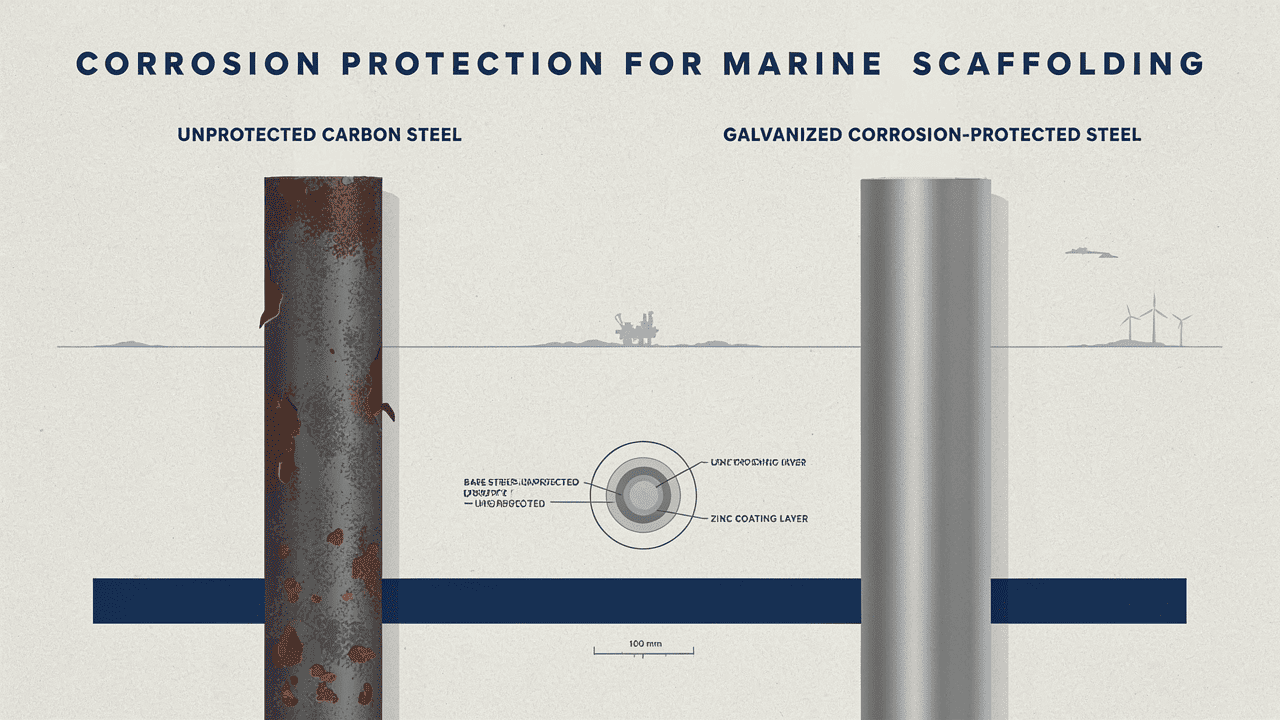
Cuplock is durable, but only when maintained.
- Clean after use. Remove salt and debris, and rinse with fresh water in coastal zones.
- Dry and store properly. Use covered, ventilated areas and avoid direct ground contact.
- Maintain coatings. Recoat damaged areas and watch galvanizing wear.
- Protect joints. Lubricate moving parts such as cups and blades to prevent seizing.
- Segregate components. Keep damaged or corroded parts away from active stock.
See our Cuplock scaffolding systems for the full range.
Training: The Missing Link
An inspection system only works with trained people. Training helps teams spot early corrosion, assemble correctly, and report defects. Cover these topics:
- Scaffold hazard recognition
- Corrosion identification
- Handling and storage
- Inspection reporting
How ALTRAD SPAR Steel Supports Lifecycle Management
SPAR manufactures Cuplock, Ringlock, tube and fittings, steel boards, and ERW pipes in Ras Al Khaimah. Beyond supply, our technical team can help with:
- Material selection for marine and coastal exposure
- Coating and protection recommendations
- Documentation, including Mill Test Certificates for QA/QC
- Maintenance guidance for Cuplock systems
The Business Case for Lifecycle Management
| Factor | Without lifecycle management | With a lifecycle strategy |
|---|---|---|
| Component lifespan | Replaced early | Extended service life |
| Safety risk | High | Controlled |
| Maintenance cost | Reactive, unpredictable | Planned and predictable |
| Project delays | Frequent | Minimal |
| Reputation | At risk | Strengthened |
Marine Exposure Is Not Optional in the GCC
From Dubai’s coastline to Saudi Arabia’s mega projects, ports, offshore platforms, and coastal infrastructure all face continuous exposure to aggressive environments. Skipping lifecycle management does not save money. It multiplies risk.
Frequently Asked Questions
How often should scaffolding be inspected in the UAE?
Inspect before each shift and after any event that could affect stability, such as impacts, storms, or modifications. Add weekly structural checks and monthly corrosion assessments on coastal sites.
What should a scaffolding inspection checklist include?
Include visual checks, joint and weld inspections, corrosion assessments, load verification, and documentation with safe/unsafe tagging.
How do you protect steel pipes from corrosion near the coast?
Use hot-dip galvanizing, add protective coatings where needed, design for drainage, and test thickness periodically.
How do you maintain Cuplock scaffolding?
Clean off salt after use, store it dry and off the ground, recoat damaged areas, lubricate moving parts and separate damaged components.
Conclusion
Steel does not fail overnight. It deteriorates through neglect. In high-salinity marine environments, inspection is mandatory, maintenance is strategic, and training is critical.
Talk to ALTRAD SPAR Steel about marine-grade scaffolding and ERW pipes:
📞 +971 7266 1004 · ✉️ info@sparsteel.com · 🌐 www.sparsteel.com
Contact our team